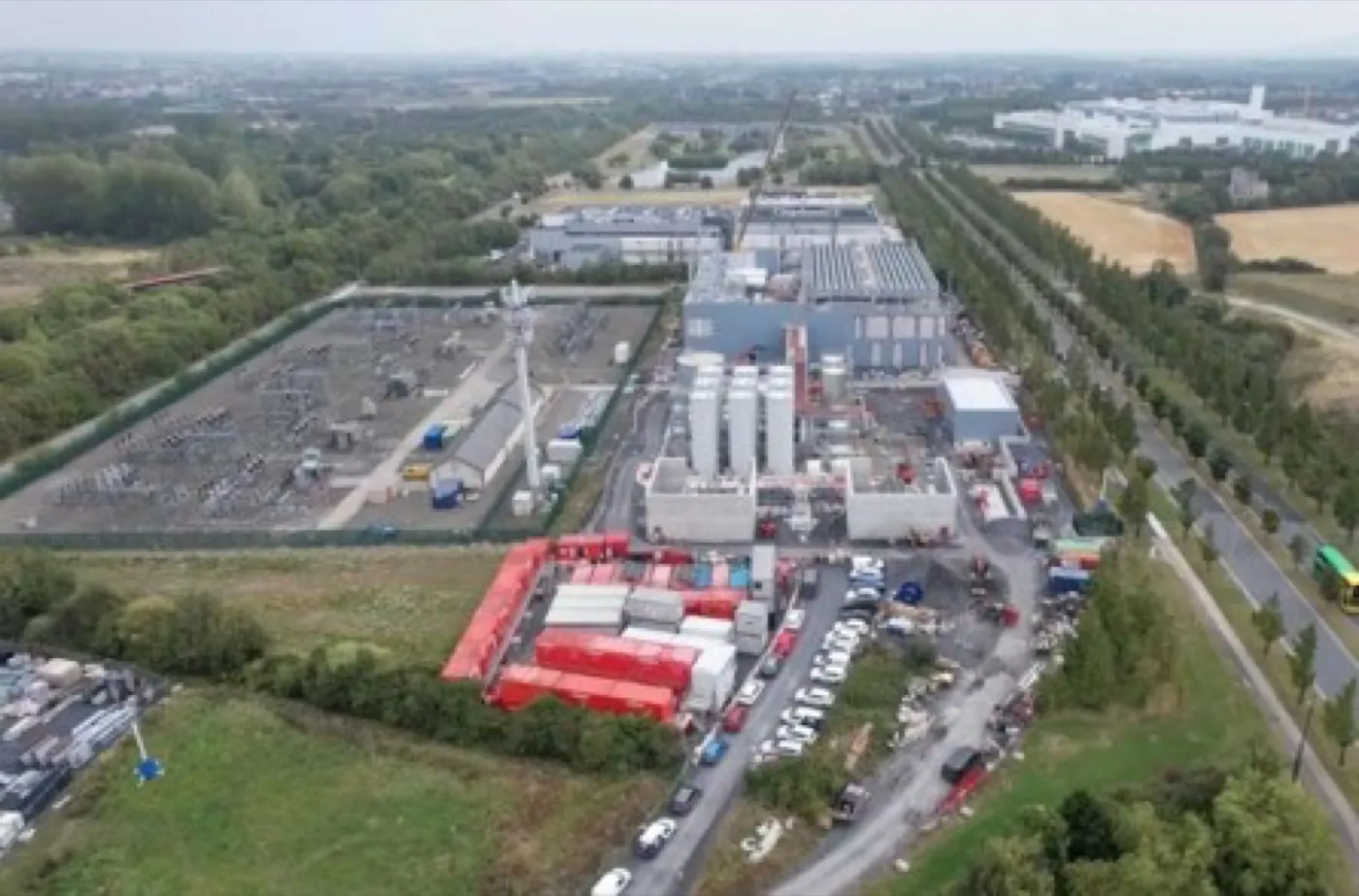
Grange Power Station is a 111 MW dual-fuel peaking power station located at Grange Castle Business Park in Dublin. Developed to support the reliability of Ireland's electricity network as renewable generation continues to increase, the facility comprises six MAN 18V51/60DF medium-speed dual-fuel engines capable of operating on natural gas with diesel as a secondary fuel. The power station was designed to respond rapidly to changes in electricity demand while maintaining high levels of reliability and security of supply.
Acoustic design was a critical consideration from the earliest stages of the project due to the scale of the generating plant and the proximity of nearby noise-sensitive receptors. Allegro Acoustics was appointed during the design phase to support the contractor with a robust environmental noise impact assessment and ensure the completed development could achieve the required environmental noise criteria.
Allegro Acoustics worked closely with the contractor and design team throughout the project, providing specialist acoustic consultancy from concept design through to construction. A detailed environmental noise impact assessment was undertaken using SoundPLAN environmental noise modelling software to predict operational noise levels from all significant plant items and assess compliance with the project noise limits. The assessment considered the cumulative contribution of the six generating engines, associated balance-of-plant equipment and auxiliary systems, identifying the acoustic performance required from each element of the proposed noise mitigation.
A comprehensive technical report was prepared outlining the required mitigation measures, including the target insertion losses for silencers, acoustic louvres, enclosures and other noise control treatments. Performance specifications and product recommendations were developed to enable the contractor to procure appropriate acoustic mitigation with confidence. Throughout the construction phase, Allegro Acoustics continued to support the design team by reviewing supplier submissions, providing technical advice on design changes and ensuring the installed mitigation remained aligned with the project noise criteria.
The result was a robust, engineering-led acoustic design that managed acoustic risk from the earliest stages of the project and provided the contractor with a clear, practical pathway to achieving compliance.

Your enquiry is on its way. We'll be in touch shortly.