What exactly is a noise survey, and when do you need one? In this guide we explore the importance of noise surveys and their applications...
There are different types of noise survey, to suit different contexts. Some are required to protect workers, some to manage impact, others are for planning approval. Each type provides unique information.
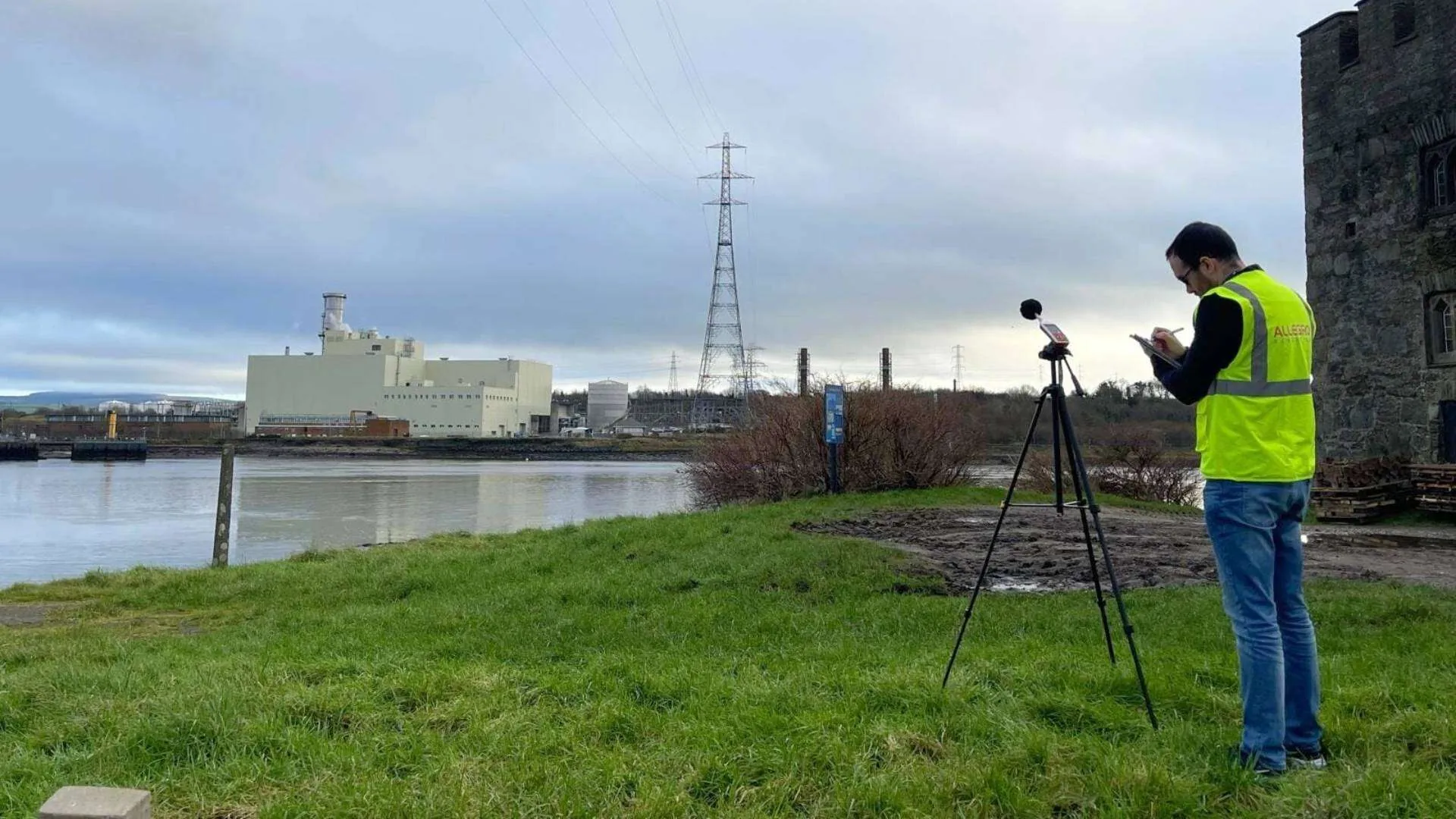
An environmental noise survey measures sound around a facility, a place of business or worksite. It determines whether operations are within legal noise limits and compliant with EPA or ISO 1996 standards. These surveys are important for pharmaceutical plants, other manufacturing facilities, data centres or power stations, where external noise can impact local residents. Results provide evidence for licence compliance, help prevent complaints, and guide future environmental noise strategy.
Occupational noise surveys measure employee exposure to noise in the workplace, where machinery, equipment or processes generate high sound levels. Required under Health and Safety Authority (HSA) regulations, they identify if daily exposure exceeds safe thresholds. The surveys provide recommendations for noise reduction; engineering controls, improved processes or personal protective equipment (PPE).
They also establish whether hearing protection programmes are required. Regular assessments, typically every one to two years, safeguard employee health, reduce the risk of hearing loss and claims, and deliver compliance with Irish and international noise related legislation.
Similar to an Occupational Noise Surveys, a workplace noise risk survey offers a full assessment of how noise affects employees and operations. It evaluates daily exposure patterns, identifies tasks with elevated risk, and considers the effectiveness of existing controls. A prioritised, actionable plan is offered, to reduce noise hazards. Recommendations may include the redesign of work areas, isolating noisy equipment or adjusting work schedules. This type of survey demonstrates proactive risk management, and delivers compliance with HSA obligations.
Industrial noise surveys combine environmental, occupational, and process-specific analysis within large facilities. Manufacturing plants, data centres, and power generation sites all produce complex noise profiles, and require detailed assessment. These surveys use modelling and noise mapping to identify sources of excess noise, assess impacts on both employees and the community, and test potential solutions before they’re implemented.
Results outline design improvements, operational adjustments, or noise control measures. For businesses, the surveys provide reliable, engineering-led data that supports smarter decision-making, reduces downtime and delivers long-term compliance with regulatory noise requirements.
Planning noise assessments are required during new construction, site expansion, or redevelopment projects. Local authorities often request them, so that proposed works do not create noise impacts on the surrounding area. These assessments take background noise measurements, and using advanced noise modelling, predicts the impact of the construction phase, and operations. The detailed acoustic report demonstrates compliance with planning guidelines. Recommendations may include site layout changes, building design adjustments, or the installation of noise barriers.
An Industrial Emissions Licence (IEL) noise survey is an annual requirement for many regulated industrial operators in Ireland. These surveys confirm that facilities are operating within the strict noise conditions of their licence; pharmaceutical plants, data centres, power stations and other types of manufacturing. Surveys must follow EPA guidance, including NG4 and ISO standards, and provide documented evidence of compliance. They also highlight potential risks before they escalate.
A BS4142 assessment is a specialised form of noise impact analysis based on the British Standard BS4142. It is widely used by Irish and UK planning authorities to assess the impact of industrial and commercial noise on the local community. The method compares the background noise environment with the specific sound generated by the facility, applying penalty factors where noise is tonal, impulsive, or intermittent. It determines whether noise levels are acceptable or whether mitigation is required. For developers and operators, a BS4142 assessment provides a standardised framework to demonstrate compliance.
What is a noise survey?... a noise survey is a structured process, delivering accurate, meaningful, and actionable data. Each stage, measurement, analysis, and reporting, plays a role in identifying risks, recommending solutions, and delivering compliance with relevant guidelines and legislation.
The first step is precise measurement of noise levels using calibrated equipment, sound level meters and dosimeters. This equipment captures sound pressure levels across different environments, the factory floor or community boundaries. Measurements must follow recognised standards, ISO 1996 for example. Readings are typically taken over representative operating conditions, work shifts for example, capturing variations in noise throughout the day.
Once measurements are collected, detailed analysis is carried out to interpret the data, evaluating key factors; frequency, amplitude, duration of exposure etc. The analysis determines whether noise levels exceed occupational exposure limits, planning requirements, or licence conditions. In an industrial context, modelling and mapping tools may be used to visualise noise distribution, pinpoint problem sources, and predict how changes in process or equipment will affect sound levels.
The final stage is reporting; findings are compiled into a clear, comprehensive document. Reports explain measured levels, identify sources of concern, and assess compliance against relevant standards. Importantly, they provide recommendations; engineering controls, equipment modifications,administrative measures and personal hearing protection. A well-prepared report demonstrates regulatory compliance gives managers a roadmap for future action.
Noise is not just an inconvenience; it can affect business performance, employee health, and the local community. Uncontrolled noise can lead to regulatory breaches, legal claims, strained relationships and costly challenges.
In Ireland, strict legislation governs noise management. Industrial operators must comply with Industrial Emissions Licences (IEL), which set specific noise conditions aligned with EPA guidance such as NG4 and ISO 1996. Failure to comply can result in enforcement actions, fines, or even operational restrictions. Employers must also meet obligations under the Safety, Health and Welfare at Work Act and associated HSA noise regulations. Planning laws also require noise assessments for new developments.
Workplace noise has a direct impact on employee health and productivity. Prolonged exposure above safe thresholds can cause permanent hearing loss, tinnitus, or stress-related conditions. Employers in Ireland are legally required to assess noise levels, implement controls, and provide hearing protection where necessary. Regular noise surveys and risk assessments help provide safe working conditions. Beyond compliance, effective management reduces absenteeism, improves staff morale, and lowers the risk of compensation claims.
Excessive or poorly managed noise can lead to complaints, reputational damage, and opposition to future developments. An environmental noise survey, and mitigation measures, help to maintain good neighbourhood relations and demonstrate corporate responsibility. Engaging with communities and regulators builds trust, reduces conflict, and creates a cooperative environment. Strong community relations protect a company’s reputation.
Sustainable business practices include noise management. Excessive noise can impact biodiversity, as well as human health. Including noise control in your sustainability strategy supports compliance with ESG goals and international standards. It also reduces risks associated with regulatory breaches, project delays, or reputational harm. Think quieter technologies and proactive planning.
Noise is generally categorised into four main types: continuous, intermittent, impulsive, and low-frequency. Continuous noise, running machinery for example, is steady and predictable. Intermittent noise stops and starts, turning equipment on and off for example. Impulsive noise has sudden peaks, think hammering, which can be especially damaging. Low-frequency noise, often produced by heavy equipment or HVAC systems, can travel long distances and penetrate buildings.
Exposure to high or prolonged noise carries significant risks. For employees, it can cause permanent hearing loss, tinnitus, fatigue, and stress-related health issues. For businesses, unmanaged noise can result in regulatory fines, legal claims, reduced productivity, and costly downtime. Those exposed to industrial noise may suffer sleep disturbance, reduced quality of life, and other health impacts over time. These risks are more than just compliance; they affect reputation, employee retention, and operational efficiency. Proactive control measures reduce these risks.
Noise surveys are a regulatory requirement, but also a practical tool for managing risk. If you’re planning a development, have employees, expanding a facility, or have community concerns, a noise survey is responsible.
For new buildings, infrastructure works or site expansions, local authorities typically require noise assessments as part of the planning application. These surveys demonstrate that proposed developments will not create unacceptable noise impacts for the neighbouring community, using baseline monitoring, predictive modelling, and recommendations for mitigation where necessary. Without a noise survey, projects risk delays, objections, or even refusals from planning authorities.
Employers have a legal obligation to protect employees from excessive workplace noise levels under HSA regulations. Occupational noise surveys identify areas where noise exposure exceeds safe thresholds and recommend solutions. Regular surveys, carried out yearly for example, provide evidence of compliance and demonstrate your commitment to employee health. For any employer operating machinery, running any type of manufacturing facility or busy work environment, a noise survey is a must.
Noise complaints from employees, regulators, or the local community are a clear sign that you need a survey. A professional noise survey provides independent, accurate data to assess the validity of the complaint and identify solutions. By acting quickly, businesses can demonstrate good faith, prevent escalation, and avoid enforcement actions, as well as reputational harm. Surveys also provide evidence in discussions with regulatory bodies.
Our acoustic testing and noise surveys do more than tick a box, they deliver meaningful outcomes. We meet regulatory requirements, and we give our clients confidence, that they’re compliant and they’ll avoid costly enforcement. Our expert acoustic engineers deliver surveys that identify issues and provide solutions.
Industrial facilities face unique noise challenges, due to their scale and complexity. We also provide complete industrial noise control services; environmental noise monitoring and occupational noise assessments, advanced acoustic modelling and noise mapping. Our engineers pinpoint the sources of noise and design targeted solutions. Where a survey supports a licence condition or a noise complaint, it is delivered through our environmental noise monitoring service.

Your enquiry is on its way. We'll be in touch shortly.