Noise monitoring maintains a safe workplace, delivers smooth operations and builds a strong relationship with the local community...
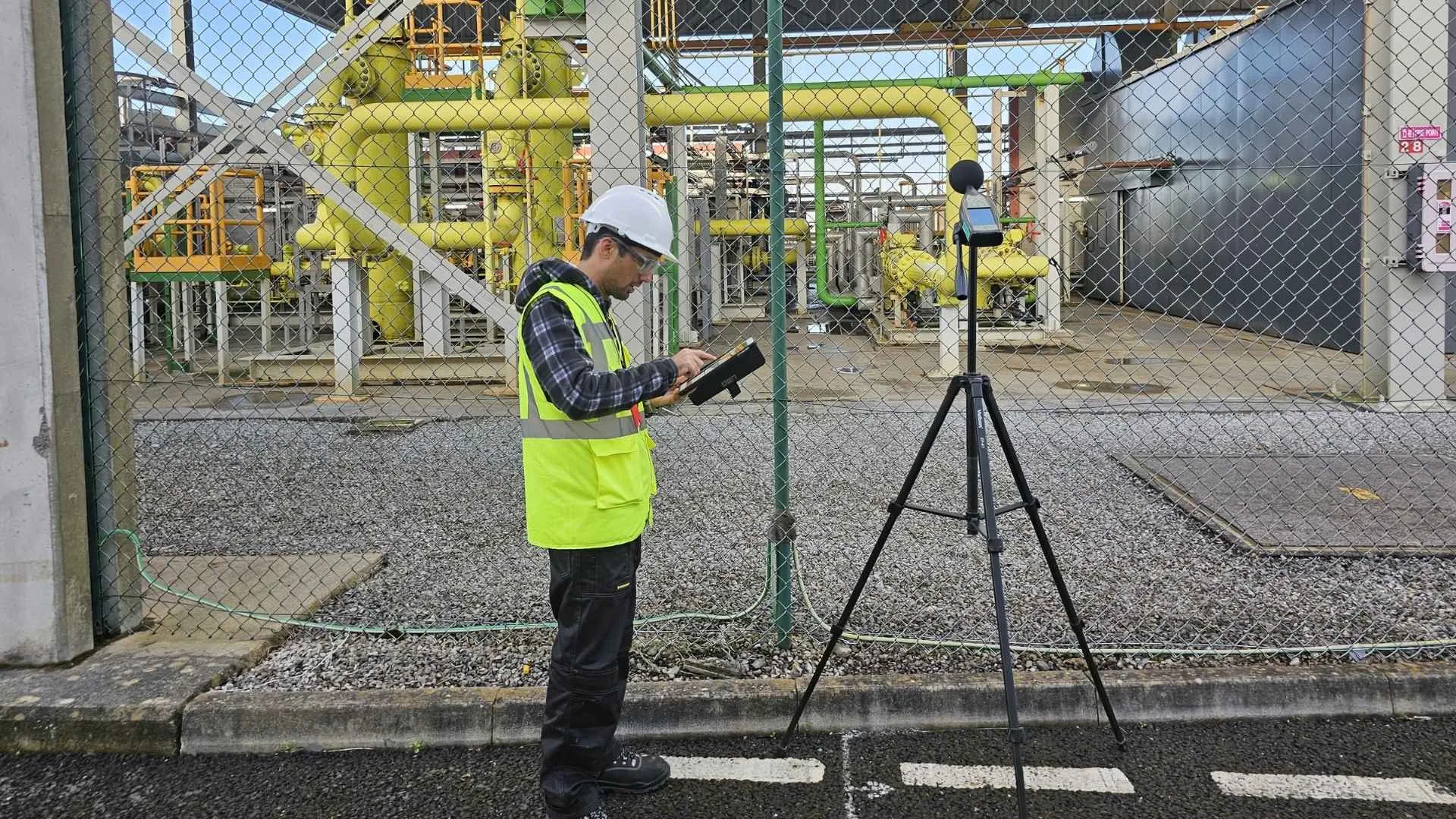
Noise monitoring measures and analyses sound levels in an environment to understand their impact on workplaces, on people and the wider community. It plays an important role in compliance, it supports occupational health, and helps to manage potentially harmful noise levels, particularly in industrial and commercial settings. Accurate monitoring provides the data required to identify risks, evaluate control measures and inform decision making across various sectors, particularly manufacturing, pharma and energy.
Noise monitoring has three key aspects: what’s being measured, the average exposure and peak levels. Measurements typically include continuous sound levels (LAeq), that represent average exposure over time, and instantaneous peaks (LCPeak or Lmax) that capture sudden loud events. Together, these readings measure both the ongoing and exceptional noise conditions.
Noise monitoring goes beyond compliance. In the workplace, it protects employees from long-term hearing damage and delivers HSA compliance. Environmentally, it helps operators meet Industrial Emissions Licence (IEL) requirements and control noise impact. Monitoring is also used in response to public complaints or during planning and construction to demonstrate responsible noise management.
Excessive noise has effects on both human health and the environment, making it one of the most persistent and underestimated forms of pollution (although many people don’t consider noise pollution to be pollution). For people, prolonged or repeated exposure to high sound levels can result in irreversible hearing damage, while also contributing to broader health issues like stress, fatigue and even depression. In industrial settings, these increased risks are particularly pronounced, placing a duty of care on employers to protect their workforce.
Noise-induced hearing loss is the most preventable occupational health issue, yet it continues to affect workers regularly exposed to loud machinery or production equipment without adequate controls. Unlike other hazards, permanent hearing loss often develops gradually, going unnoticed until it becomes permanent. Outside the workplace, excessive noise is an environmental issue. It contributes to noise pollution, it can disrupt wildlife and habitats, and can affect the quality of life for those living nearby. Industrial and construction noise are among the most frequent causes of public complaints to local authorities and the EPA.
Noise monitoring is carried out using precise instruments and standardised methods, designed to accurately capture the sound environment over time. The process depends on the purpose; evaluate noise exposure levels, verify compliance or investigate environmental complaints. In all cases, engineers look at the type of noise source, the duration of exposure and location of measurement points. Measurements are typically expressed in decibels (dB), with results analysed against relevant Irish, EU, and ISO 1996 standards.
Instantaneous noise monitoring is used to capture sound levels over a short period, typically minutes or hours, to identify peak levels and specific sources of noise. This method uses handheld sound level meters or portable noise analysers that provide real-time readings. Engineers often conduct these measurements at key locations, site boundaries or employee workstations for example. The data collected provides an immediate understanding helping to pinpoint problem sources.
Continuous noise monitoring is the opposite, deploying fixed or semi-permanent equipment to measure sound levels over extended periods; several days to months. This method captures daily variations in noise during normal working hours, providing a comprehensive profile of acoustic impact. Continuous monitors record data automatically and can alert operators if thresholds are exceeded, perfect for ongoing compliance with Industrial Emissions Licence conditions, and larger facilities.
We use specialist noise monitoring software to collect, process, and interpret acoustic data across industrial, construction, and environmental contexts. Our toolkit integrates directly with our sound level meters. These platforms support remote telemetry, automated threshold alerts, and secure data logging, for a clear audit trail. Trends can be quickly visualised, sources isolated, and reports can be produced for EHS teams, planning submissions, and the regulators.
Understanding noise regulations is part of the job too; maintaining compliance, protecting employees and preventing environmental issues. In Ireland, employers and operators are governed by a combination of national legislation, European directives and international standards that define acceptable noise levels, monitoring requirements, and mitigation responsibilities.
ISO 1996 is the international standard that defines the principles and methods for measuring and assessing environmental noise. It specifies how peak sound pressure levels should be determined, what parameters should be reported and how results are interpreted. Acoustic consultants use ISO 1996 to ensure that noise monitoring is conducted consistently and that results are internationally comparable. In Ireland, compliance with ISO 1996 sits alongside the EPA’s guidance and is often referenced in the IEL conditions.
BS 4142 is a British standard, widely used across Ireland and the UK to assess industrial and commercial noise in relation to existing background sound levels. It provides a structured method for determining the likelihood of complaints. The risk assessment compares the source noise level to the prevailing background noise and applies penalties for tonal, impulsive, or intermittent characteristics. This helps determine whether noise from a site is likely to cause disturbance.
The Environmental Protection Agency’s Guidance Note for Noise (NG4) is the primary Irish reference document for assessing and controlling noise from licensed industrial facilities. It outlines the methodology for environmental noise monitoring, specifies noise limits at sensitive receptors and details how compliance with Industrial Emissions Licences should be demonstrated. NG4 also establishes best practice for survey design, reporting and noise mitigation, making it THE resource for both operators and consultants.
Yes. Under Irish and EU legislation, noise monitoring is a legal requirement in several contexts. Employers must assess and control noise at work under the Safety, Health and Welfare at Work (General Application) Regulations 2007, while industrial operators must monitor environmental noise to comply with Industrial Emissions Licences. Failure to meet these obligations can result in enforcement action, fines, or licence breaches. Regular monitoring demonstrates due diligence and helps prevent disputes with employees, neighbours and the regulators.
Workplace noise exposure limits are defined in law, and they trigger specific employer responsibilities. The lower exposure action value is set at 80 dB(A), at which point employers must provide hearing protection and conduct periodic hearing checks. The upper exposure action value, 85 dB(A), requires immediate intervention to reduce exposure; through control measures, process adjustments or restricted access to noisy areas. These thresholds protect workers from the effects of long-term exposure and help companies manage legal risks.
Local authorities play an important role in managing noise and enforcing standards for non-licensed activities. They are responsible for investigating noise complaints under the Environmental Protection Agency Act 1992 and related regulations. This includes the assessment of nuisance noise from commercial premises, construction activities, entertainment venues and transportation noise, road traffic noise or aircraft noise for example. Councils may issue warning notices or take enforcement action where unreasonable noise is identified.
Noise pollution is a concern in urban areas. Common sources include industrial plants, construction sites, road traffic and building services. Persistent or excessive noise often leads to complaints from residents or even neighbouring businesses, prompting investigations by local authorities or the EPA. Independent noise monitoring and reporting can resolve these noise problems, establishing an accurate and transparent record of sound levels.
Noise assessments and surveys form the foundation of what we do here at Allegro Acoustics; managing and controlling sound across industrial, commercial and environmental contexts. These assessments are carried out by fully qualified acoustic engineers using precision instruments and data analysis software. Each survey is tailored to the requirements of the client and their operational needs; workplace noise levels, industrial emissions, planning applications or acoustic design projects.
Environmental noise surveys evaluate emissions from licensed industrial facilities; pharmaceutical plants, data centres, power generation etc. Occupational noise assessments are done in the workplace, to determine employee exposure to noise and vibration and identify high-risk zones. Noise assessments are also part of the planning process, particularly where new industrial or infrastructure developments are proposed close to residential areas. Noise mapping and noise modelling also form an important part of these services, visualising noise propagation across an area and assessing how different design options will influence sound levels.
Workplace noise is a health and safety consideration, and health surveillance is a key focus of regulatory oversight. Prolonged exposure to excessive noise can cause hearing loss, tinnitus, fatigue and other stress-related health effects. To prevent this, employers are required to conduct regular noise risk assessments, and in some cases regular noise monitoring. Accurate exposure records, employee training and consistent use of hearing protection are all components of a noise management programme.
The term “occupational noise monitoring” describes the systematic measurement and analysis of noise levels in workplaces where employees are exposed to potentially harmful sound levels. Using precision sound level meters and dosimeters, engineers measure noise levels, identify high-risk operations and evaluate compliance with exposure action values. Results are analysed, and identify where improvements are required. Detailed reports provide clear, actionable recommendations, supporting compliance with HSA regulations and protecting employees. Regular monitoring demonstrates due diligence and builds a long-term picture of noise exposure trends.
Exposure to hand-arm or whole-body vibration presents a similar risk to employee health as noise exposure and is regulated under the Control of Vibration at Work Regulations. Vibration monitoring assesses the levels generated by tools, machinery, and vehicles that employees use as part of their daily duties. Engineers conduct vibration assessments to quantify exposure, identify sources and evaluate the effectiveness of existing controls. Measurements are carried out using specialised accelerometers and data loggers, with results compared against regulatory exposure action and limit values.
Once risks have been identified, control measures can be implemented to reduce exposure to safe levels. Engineering solutions are always the preferred option and may include acoustic enclosures, noise barriers or damping treatments. Administrative controls, limiting time spent in noisy areas for example, further reduce exposure. Where residual risk remains, employers must provide suitable personal protective equipment (PPE). Our noise assessments include detailed guidance on selecting appropriate hearing protection.
Environmental noise monitoring plays a huge role in managing the impact of human activity on the surrounding community, and the natural environment. Monitoring and analysing sound levels from industrial operations, construction activities, transport infrastructure, and other sources, the effects can be assessed. This type of monitoring is particularly important in pharmaceuticals, power plants and manufacturing, where continuous noise emissions are common.
Environmental noise monitoring provides the evidence base for identifying excess noise, diagnosing the source and developing targeted control strategies. Typically, recommendations for barrier design, acoustic treatment, or operational scheduling are made. For long-term projects, continuous monitoring stations can provide real-time feedback and automated alerts when limits are close.
check out the live Dublin noise map...
Noise monitoring is a compliance requirement, but more than that, it protects staff, company performance and the environment. Whether you manage an industrial facility, a construction project or large commercial site, accurate data is all that really matters. Regular monitoring identifies risks early, supports compliance and reduces costly disruptions or complaints.
At Allegro Acoustics, our engineers deliver monitoring and analysis for workplaces, complex industrial operations and the construction sector. We apply recognised standards; ISO 1996, BS 4142, NG4 etc. provide clear results and practical recommendations that solve problems at the source. If you need reliable, expert noise monitoring our team can help you measure and manage, with confidence. Contact us to discuss your site requirements...

Your enquiry is on its way. We'll be in touch shortly.