Industrial soundproofing is a compliance task, a risk management strategy and a workplace comfort upgrade. This guide covers noise control for pharmaceutical facilities, data centres and manufacturing environments where high noise levels trigger regulatory requirements.
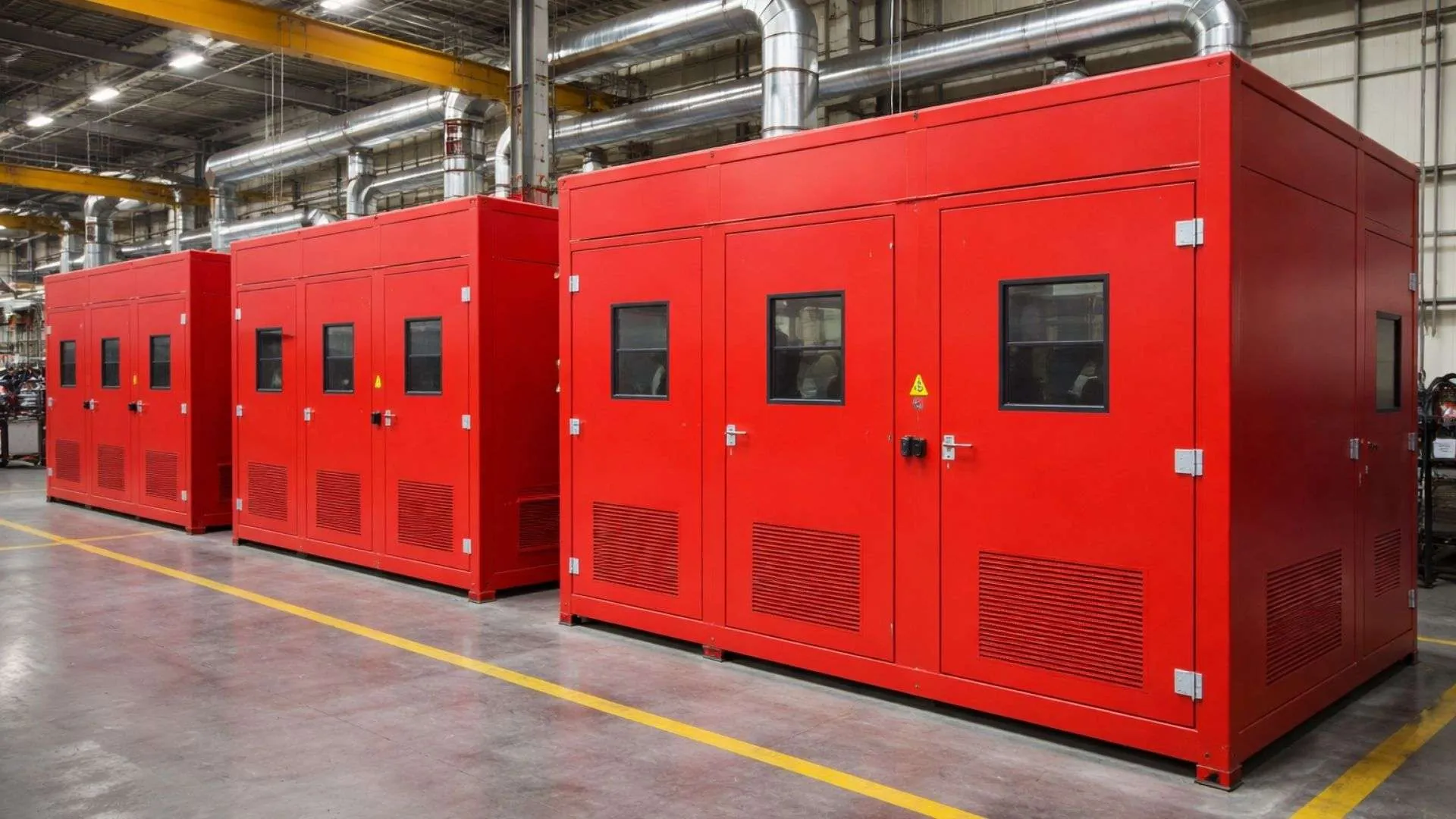
Manufacturing and industrial facilities commonly experience high airborne sound pressure levels. Without a noise control plan, organisations face regulatory action, public complaints, staff grievances, and health risks.
In Ireland, workplace noise exposure falls under the Safety, Health and Welfare at Work (General Application) Regulations 2007. Environmental noise is regulated through Industrial Emissions Licence conditions enforced by the Environmental Protection Agency, with boundary limits defined in LAeq terms per ISO 1996.
The key exposure thresholds are:
When exposure reaches or exceeds these levels, employers must assess risk, implement controls, and provide hearing protection.
Sound insulation reduces overall sound pressure levels or controls how sound behaves within spaces by limiting direct transmission. Proper detailing, addressing gaps at wall junctions, poorly fitted doors, and unsealed ducts, is critical for measurable performance improvement.
Industrial noise often originates from compressors, chillers, pumps, generators, HVAC systems, and process equipment. Effective soundproofing begins by identifying dominant noise sources through noise surveys and acoustic modelling.
Acoustic enclosures are engineered housings that contain airborne noise while maintaining ventilation and access. Performance depends on panel mass, internal absorption, airtightness, and vibration isolation of the enclosed equipment.
Vibration isolation prevents machinery from transmitting energy into floors or structural frames, reducing secondary airborne noise.
Effective industrial systems integrate absorption, insulation, and vibration isolation. Key considerations include:
Two main categories exist: sound insulation (preventing noise from entering or exiting a space) and sound absorption (reducing reflected sound within a space). Products reduce airborne and impact noise across walls, ceilings, and floors using thick, dense materials like mineral wool insulation.
Barriers and enclosures control sound at the transmission path, potentially reducing transmitted noise by up to 97 percent depending on configuration.
Vibration isolation addresses structural and impact noise from mechanical equipment transmitting energy into building floors and frames.
In mixed-use areas within industrial spaces, acoustic pods provide controlled environments for testing, supervision, phone calls, or meetings. They combine insulated walls, sealed glazing, and internal absorption to eliminate or substantially reduce external noise.
Industrial soundproofing is an engineering discipline grounded in measurement, modelling, and regulatory compliance. Effective noise control requires balanced approaches integrating barriers, porous materials, and vibration isolation.
The industrial noise control approach begins with acoustic testing, detailed measurement and analysis including workplace noise risk assessments and environmental noise surveys to quantify levels and assess compliance. Solutions focus on engineered controls at source, including acoustic enclosures, barriers, treatments, and vibration isolation systems tailored to specific layouts.
For organisations managing noise compliance risk, planning upgrades, or responding to regulatory pressure, effective soundproofing relies on three principles: treat the source, interrupt transmission, and protect employee well-being. This structured engineering process delivers measurable reduction in exposure levels and documented compliance.

Your enquiry is on its way. We'll be in touch shortly.